








Insurance inspections are often perceived as interruptions.
A notice arrives, attention shifts to exterior condition, and what once felt acceptable suddenly feels urgent. For many property owners and managers, inspections appear to introduce problems that did not previously exist. In reality, inspections do not create issues.
They reveal how exterior care has been approached over time.
What Insurance Inspections Are Actually Assessing
Insurance providers are not evaluating appearance in the same way an owner or resident might. Their concern is not whether a surface looks clean today, but whether exterior conditions suggest future risk.
During inspections, visible indicators are often interpreted as signals of:
- Prolonged moisture exposure
- Inconsistent or reactive maintenance
- Accelerated material aging
- Increased likelihood of future claims
These signals are evaluated collectively, not individually. A single condition rarely raises concern on its own—but patterns do.
Why Exterior Issues Feel “Sudden”
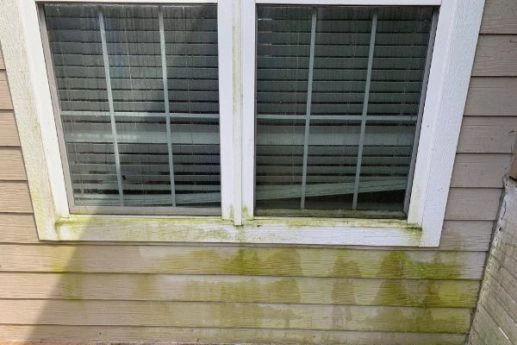
Exterior deterioration rarely announces itself dramatically. Moisture retention, organic growth, and environmental exposure tend to compound gradually. Without regular evaluation, these changes can remain unnoticed until an inspection highlights them. When exterior care has been reactive, inspections feel disruptive. When care has been planned, inspections feel expected.
The Difference Between Passing and Managing
Many properties respond to inspection findings by addressing only what is flagged. This approach can satisfy immediate requirements, but it often leaves underlying risk unchanged. Passing an inspection does not necessarily mean risk has been reduced—it means a threshold was met. Preservation focuses on managing conditions before they reach inspection-level concern, not simply responding once they do.
How Preservation Changes Inspection Conversations
When exterior care is guided by evaluation and documentation, insurance conversations take on a different tone.
Preservation-oriented properties can demonstrate:
- Awareness of exterior condition
- Intentional management of recurring issues
- Consistency over time rather than episodic response
- Clear rationale for action—or restraint
In these cases, inspections become confirmations of responsible stewardship rather than catalysts for urgent decisions.
Why Appearance Alone Is a Poor Risk Indicator
A surface can look acceptable while deterioration continues quietly beneath the surface.
Conversely, a surface may show mild staining while remaining stable and well-managed. Insurance assessments are influenced by patterns , not perfection. Preservation emphasizes understanding how conditions develop, change, or stabilize over time—rather than relying solely on visual cues.
Planning Ahead Reduces Pressure Later
Properties that approach exterior care with foresight tend to experience:
- Fewer urgent inspection responses
- More predictable maintenance planning
- Reduced stress during renewals
- Greater flexibility in decision-making
Preservation does not eliminate inspections. It removes the uncertainty surrounding them.
A Final Perspective
Insurance inspections are not obstacles to exterior care. They are reflections of how care has been managed. When preservation is in place, inspections no longer drive decisions—they confirm them.
Where This Conversation Continues
Managing exterior condition proactively begins with understanding exposure, patterns, and progression. If exterior decisions are being made primarily in response to inspection notices or insurance pressure, the next step is alignment and evaluation—before urgency dictates outcomes.