








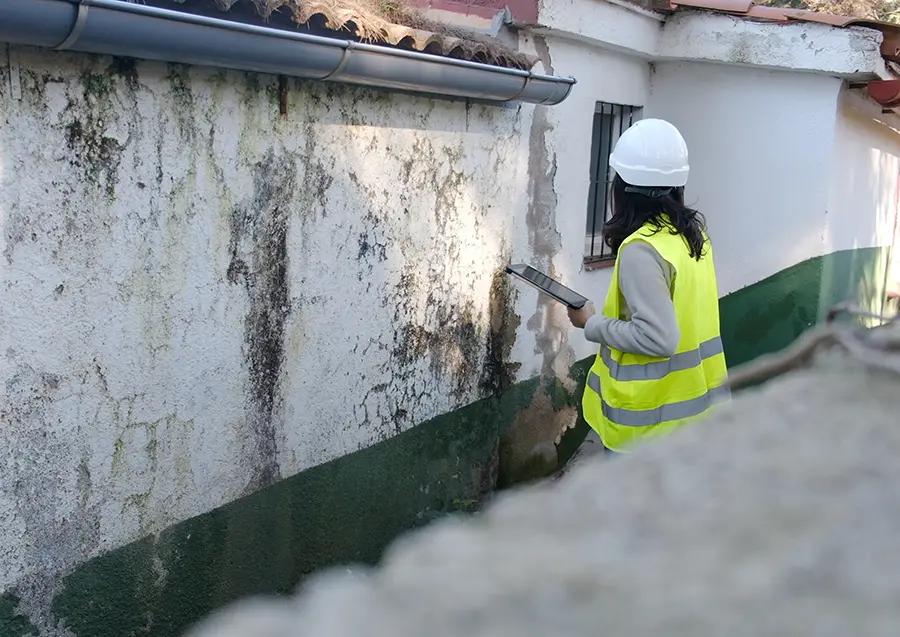
When insurance inspections raise concerns, the issue is rarely a single surface condition.
More often, the concern is uncertainty. Inspectors are tasked with evaluating risk, and risk increases when exterior condition lacks context.
Documentation provides that context.
Why Exterior Documentation Matters During Inspections
Insurance inspections are snapshots. They capture exterior condition at a specific moment in time. Without documentation, that snapshot stands alone. Inspectors are left to interpret what they see without knowing:
- Whether a condition is new or longstanding
- Whether it is being monitored or ignored
- Whether it is stable or progressing
- Whether exterior care is intentional or reactive
In the absence of context, inspectors must assume risk.
What Documentation Communicates to Insurers
Documentation does not exist to prove that work was performed. Its purpose is to demonstrate responsible management . When documentation is present, it communicates:
- Awareness of exterior condition
- Consistency in evaluation
- Intentional decision-making
- Ongoing attention rather than neglect
This matters because insurers assess not just condition, but how a property is being managed over time.
The Difference Between Records and Preservation Documentation
Invoices and receipts are records. Preservation documentation is different.
Effective preservation documentation focuses on:
- Baseline condition observations
- Environmental exposure considerations
- Areas of concern and areas of stability
- Rationale for action—or restraint
- Timing decisions and review intervals
This information allows inspections to be interpreted within a broader maintenance narrative.
How Documentation Reduces Inspection Pressure
Properties without documentation often experience inspections as disruptive events. Conditions feel “flagged” without warning, timelines compress, and decisions feel forced. When documentation exists:
- Inspection findings align with known conditions
- Conversations feel confirmatory rather than corrective
- Decisions are easier to justify internally and externally
- Urgency decreases because awareness already exists
Documentation does not eliminate inspection findings. It prevents surprise.
Supporting Consistency Across Inspection Cycles
Insurance reviews occur repeatedly over time, often with different inspectors and underwriters. Without documentation, each inspection becomes a fresh evaluation. With documentation, continuity exists even as personnel change.
This continuity:
- Reduces contradictory interpretations
- Demonstrates long-term stewardship
- Protects against shifting expectations
- Supports predictable decision-making
In this way, documentation becomes a stabilizing force.
When Documentation Supports the Decision Not to Act
One of the most overlooked benefits of documentation is its ability to justify restraint.
Documented evaluations can demonstrate when:
- Conditions are stable
- No immediate intervention is required
- Action would introduce unnecessary stress
- Monitoring is the most responsible choice
In insurance conversations, documented restraint can be as valuable as documented action.
A Final Perspective
Insurance inspections respond to clarity. When exterior care is documented thoughtfully, inspections become part of an ongoing conversation rather than moments of uncertainty. Risk decreases not because everything looks perfect, but because management is visible and intentional.
Documentation is not administrative overhead. It is a preservation tool.
Where This Conversation Continues
Effective documentation begins with evaluation and alignment—not after an inspection notice arrives. If exterior care decisions would benefit from clarity, continuity, and defensibility, the next step is establishing a documented preservation framework.